Noticing your hair becoming thinner around the temples can be worrying, especially if the rest of your hair still appears healthy. Because this area frames your face, even subtle changes in hair density tend to stand out more than thinning elsewhere on the scalp. You may first notice a widening gap when you tie your hair back, style it differently, or compare recent photographs with older ones.
If you have searched for “hair loss at temples female”, you have probably found a long list of possible causes. While genetics, hormonal changes, stress, and certain hairstyles are commonly mentioned, temple hair loss is rarely attributable to a single factor without further assessment. Several conditions can produce a similar pattern of thinning, making it important to understand what might be happening before deciding how to address it.
Why Are the Temples Often the First Place You Notice Hair Loss?
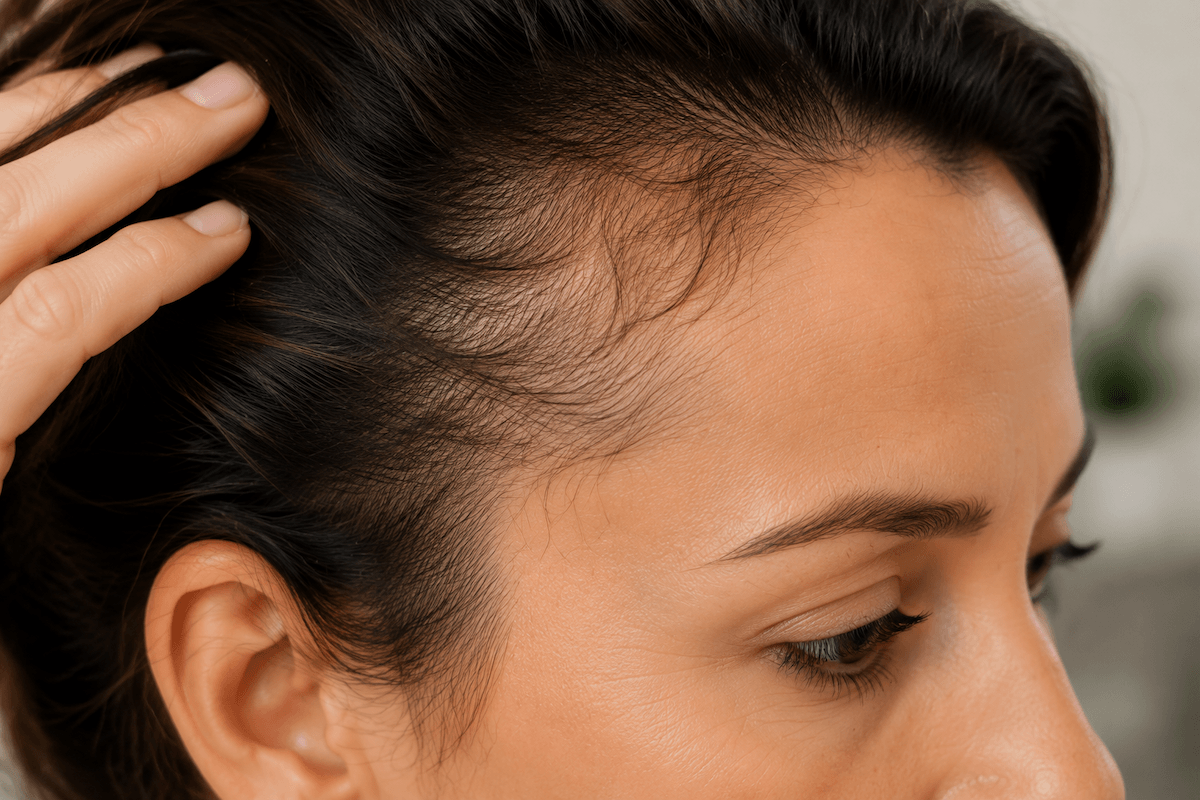
The temples often show hair thinning earlier than other areas because the hair in this region is naturally finer and the hairline provides less overall coverage. As a result, even small reductions in hair density or gradual changes in the hair growth cycle become easier to see around the temples compared to thicker areas such as the crown or back of the scalp.
Daily styling habits can make this area even more noticeable. Pulling the hair back into ponytails or updos naturally exposes the hairline, which means subtle changes are more visible during everyday grooming or when viewing the hair from different angles in photographs.
External factors can also contribute to how quickly thinning becomes noticeable. Repeated tension from tight hairstyles may place ongoing stress on the follicles around the hairline. Heat styling and friction can further affect hair that is already becoming more fragile, making changes appear more pronounced over time.
Understanding why the temples often reveal thinning first is only part of the picture. The next step is identifying what is actually causing the hair loss, as several different conditions can affect this area in similar ways.

Hair Loss at Temples Female: What Causes It?
Hair loss at the temples in women can result from several different conditions. Some women develop thinning because of genetics, while others experience it following hormonal changes or prolonged tension on the hair. Temporary disruptions to the hair growth cycle can also affect the temples. Although these conditions may produce a similar pattern of thinning, the underlying cause cannot be identified by appearance alone. This is why an accurate diagnosis is essential before deciding on treatment.
Female Pattern Hair Loss
Female pattern hair loss is one of the most common causes of gradual thinning around the temples. Unlike sudden shedding, it develops slowly over time. In genetically susceptible women, affected hair follicles gradually become smaller. As a result, they produce hairs that are finer, shorter, and less visible with each growth cycle.
Many women associate female pattern hair loss with a widening parting, but the temples can also be affected early. Because the early changes are often subtle, they can be easy to overlook at first. You may simply notice that your hairline looks less defined or that styling your hair requires more effort than before.
Although genetics increase the likelihood of developing this condition, it does not affect everyone in the same way or at the same age. Recognising the gradual pattern is important because early treatment can often help slow further progression and preserve existing hair.
Hormonal Changes
Hormones influence every stage of the hair growth cycle. When hormone levels change, they can alter how long hairs remain in their active growth phase and how many enter the shedding phase at the same time.
Many women first notice changes after pregnancy, when hormone levels return to their pre-pregnancy state. Menopause can also affect hair density over time. Certain medical conditions, including polycystic ovary syndrome (PCOS) and thyroid disorders, may further influence the hair growth cycle.
Hormonal hair loss does not always follow the same pattern. Some women experience increased shedding across the scalp before noticing thinning around the temples, while others see gradual changes without obvious shedding. Considering recent hormonal changes alongside your wider medical history often helps identify whether hormones may be contributing.
Traction Alopecia
Traction alopecia develops when repeated pulling places ongoing strain on the hair follicles. Hairstyles that keep constant tension on the hairline are the most common cause. Tight ponytails, braids, and some types of hair extensions can all place repeated stress on the temples.
The earliest signs usually appear along the hairline rather than across the whole scalp. You may notice shorter broken hairs, increased sensitivity, or thinning in areas that are consistently under tension.
Recognising traction alopecia early is important because the condition is often reversible in its initial stages. If the source of tension is removed, many follicles can recover. However, prolonged pulling may permanently damage the follicles, making natural regrowth less likely.
Telogen Effluvium
Telogen effluvium is a temporary disruption of the normal hair growth cycle. Instead of remaining in the active growth phase, an increased number of hairs enter the resting phase before shedding several weeks or months later.
This shedding typically begins two or three months after a significant physical or emotional stressor. A serious illness or surgery can trigger it, while childbirth and rapid weight loss are also recognised causes. Although the hair loss usually affects the entire scalp, thinning often appears more noticeable around the temples because this area naturally has less density.
Unlike some other forms of hair loss, telogen effluvium does not usually damage the follicles themselves. Once the underlying trigger has been addressed, the normal growth cycle often resumes. Visible improvement takes time because new hair grows gradually.
Inflammatory Scalp Conditions
Some scalp disorders cause hair loss because inflammation directly affects the hair follicles. One example is frontal fibrosing alopecia, a type of scarring alopecia that often begins around the front hairline and temples, particularly in post-menopausal women.
Inflammatory conditions differ from temporary shedding because they can permanently damage hair follicles if the inflammation is not controlled. Treatment therefore focuses on slowing or stopping further progression before significant follicle loss occurs.
One challenge is that inflammatory scalp conditions do not always cause obvious symptoms. Some women experience itching, tenderness, or redness, while others notice only gradual thinning around the temples. Because the symptoms vary, these conditions can easily be mistaken for more common forms of hair loss without a professional assessment.
Can Hair Loss at the Temples Grow Back?
Whether hair loss around the temples can grow back depends largely on the underlying cause. Some forms are temporary and improve once the trigger has been addressed. Others require ongoing treatment to slow progression, while conditions that permanently damage the hair follicles may not allow natural regrowth. This is why identifying the cause early is often one of the most important factors influencing the outcome.
One of the key factors in recovery is whether the hair follicles remain healthy. Temporary conditions such as telogen effluvium usually leave follicles intact, allowing normal hair growth to resume once the cycle normalises. In contrast, conditions involving follicle miniaturisation or scarring reduce regrowth potential.
Early intervention can also make a difference. Traction alopecia, for example, often improves when tension on the hair is removed before permanent damage occurs. Addressing hormonal or nutritional imbalances may also help support healthier growth.
Hair grows slowly, typically around one centimetre each month. Visible improvement usually develops gradually over several months rather than a few weeks.

Hair Loss at Temples Female: Getting a Diagnosis
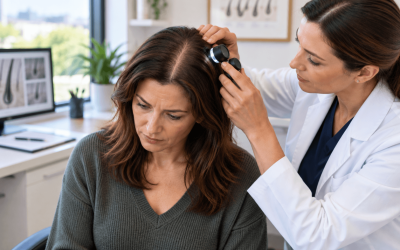
Diagnosing hair loss at temples in women involves more than simply looking at the pattern of thinning. A thorough assessment considers your medical history, recent health changes, lifestyle, and the condition of your scalp before determining the most likely cause. Depending on the findings, additional investigations may also be recommended to support an accurate diagnosis.
The assessment usually begins with a discussion about when you first noticed the thinning and whether it developed gradually or appeared suddenly. The discussion usually extends beyond your hair. Recent health changes, medications, family history, and everyday hairstyling habits can all help build a clearer picture of what may be causing the thinning. Together, these details often reveal patterns that cannot be identified from a scalp examination alone.
A close examination of the scalp is another important part of the diagnostic process. During the assessment, the clinician looks for features that may help explain why the hair is thinning and whether a particular condition is more likely. Changes to the hairline, broken hairs, or signs of inflammation can provide important clues. These findings also help determine whether further investigations are needed.
In some cases, specialised scalp imaging such as a TrichoScan can provide additional information about hair density, follicle activity, and changes over time. When an underlying medical condition is suspected, blood tests may also be recommended to check for factors such as nutritional deficiencies, thyroid disorders, or hormonal imbalances.
Although online information can help you understand the possibilities, it cannot confirm a diagnosis. Several conditions can produce similar-looking thinning around the temples, making self-diagnosis unreliable. A professional assessment helps ensure that treatment is based on the underlying cause rather than assumptions.

What Treatments Can Help Hair Loss at the Temples?
Treatment for hair loss around the temples depends on the underlying diagnosis rather than the location of the thinning alone. The priority is to identify and address the cause of the hair loss. Depending on the diagnosis, this may involve medical treatment, improving scalp health, or using clinically supported therapies to encourage hair growth.
Some cases require targeted management of underlying factors before visible improvement can occur. Simply using topical hair growth products without addressing the cause may limit results.
Clinically supported topical treatments and low-level laser therapy may be recommended in suitable cases. These approaches aim to support follicle activity and the natural hair growth cycle.
Lifestyle factors can also play a supportive role. Reducing tension on the hair, improving nutrition where needed, and maintaining scalp health may help support stronger hair over time.
In some cases where hair loss has stabilised, hair transplantation may be considered. However, this is not suitable for active or progressive conditions.
Hair growth remains a gradual process, and improvement typically takes several months. Regular monitoring helps ensure treatment remains appropriate.

When Should You Seek Professional Advice?
You should consider seeking professional advice if thinning around the temples persists or becomes more noticeable over time. An assessment is also important if scalp symptoms such as itching, redness, or tenderness develop. Persistent or progressive thinning may indicate an underlying condition that requires early evaluation.
Hair loss should also be assessed if it develops rapidly, continues for several months without improvement, or worsens despite changes in styling or hair care routines. These patterns often suggest something more than temporary shedding.
When scalp changes occur alongside thinning, it increases the likelihood of an underlying condition rather than routine hair loss. Identifying this early allows for more accurate management.
Early assessment is important because some forms of hair loss respond better to treatment before permanent follicle changes occur. Even when the cause is temporary, a diagnosis provides clarity and avoids unnecessary treatment approaches.
In conclusion, hair loss around the temples can have many different causes, and the pattern of thinning alone rarely provides the full answer. While genetics, hormonal changes, traction alopecia, telogen effluvium, and inflammatory scalp conditions can all affect this area, each develops differently and requires its own approach to management.
The most important step is identifying why the thinning is happening rather than trying to treat the symptom alone. A professional assessment can distinguish between conditions that appear similar but require different treatment strategies. Understanding the cause allows you to make informed decisions and gives you the best opportunity to protect your existing hair and support healthier growth over time.
Concerned about hair loss at the temples? Our specialists can assess the underlying cause of hair loss at temples in females and recommend a treatment plan tailored to your needs. Call +353 (0)1 679 3618 to arrange your scalp assessment today.