Hair loss can leave you feeling unsure about what to do next. You may spend a lot of time searching for answers and comparing treatments that all promise something different. When the thinning becomes noticeable or you begin to lose confidence, it is natural to want a treatment that feels safe and realistic rather than invasive or uncertain.
Red light therapy for hair loss has become a popular choice for people who want a gentle and science-supported option. It appeals to those who prefer to avoid medication or who do not tolerate stronger treatments well. Learning how it works and what to expect helps you make informed decisions that feel right for your situation.
What Is Red Light Therapy for Hair Loss?
This form of hair growth treatment uses low-level wavelengths of red light to support the cells within your follicles. These wavelengths can help the cells produce energy more efficiently. This creates better conditions for natural growth. The treatment works with your existing hair cycle rather than trying to force new growth in an artificial way.
It is considered safe for most people, and it does not cause heat damage. The light does not injure the skin or irritate the scalp. This makes the treatment suitable for individuals who want a comfortable and non-invasive approach. It can also be used alongside other treatment strategies when advised by a professional.
Does Red Light Therapy for Hair Loss Really Work?
Yes, research suggests that red light therapy can encourage activity in weakened follicles. The treatment improves blood flow to the scalp and increases oxygen delivery. These changes support the cells that are responsible for growing hair. When the follicle environment becomes healthier, it becomes easier for new strands to develop.
Red light therapy may also increase ATP production. ATP is the energy that cells use to function. When cells have more energy available, they can perform more efficiently. This helps your follicles move through different stages of the growth cycle with more stability. Early-stage follicles often respond well because they are still capable of producing hair but may be slowed by stress, inflammation or reduced circulation.
Studies often report improvements in hair density and hair thickness among people who use red light therapy consistently. Results vary from person to person, but many individuals notice a reduction in shedding before visible regrowth becomes clear. Men and women can respond differently based on age, hormonal influences and the underlying cause of thinning.
Even with these differences in response, some patterns remain consistent. The treatment works best on follicles that remain active. It cannot restore follicles that have closed permanently, but it can strengthen ones that are still functioning.
Additionally, consistency plays an important role in achieving results. Red light therapy supports natural processes in the body, and this takes time. Regular sessions help the follicles stay stimulated so that they can move into healthier growth patterns.
What to Expect During a Red Light Scalp Treatment
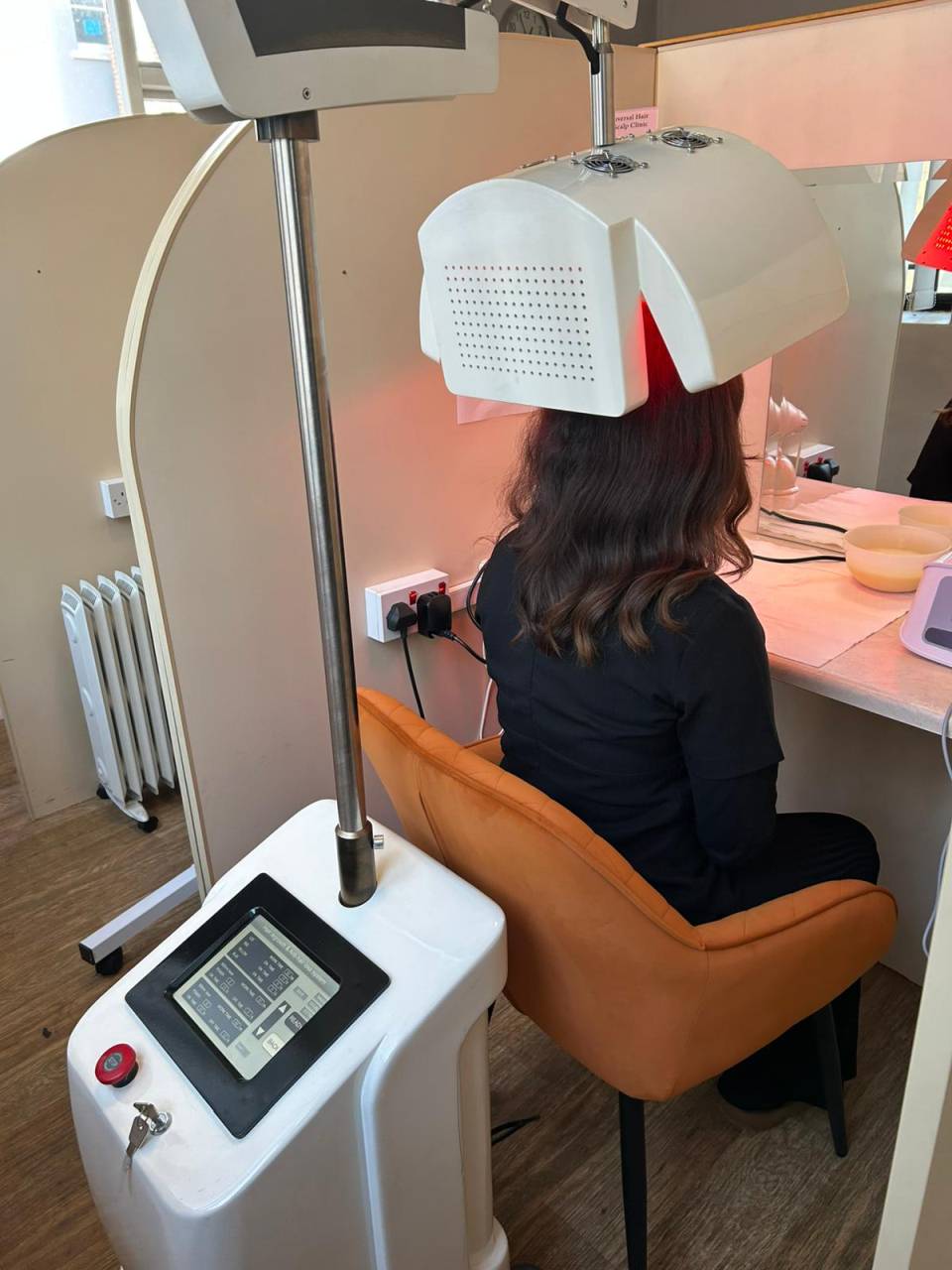
Your first session is simple and relaxed. You sit comfortably while a device directs gentle red light onto your scalp. The treatment is not painful. Most people feel no discomfort, although some notice a light warmth during the session.
Before the treatment begins, your hair loss specialist may examine your scalp to understand your pattern of thinning and check for any sensitivity. This helps them adjust the session so it suits your needs. You will not need special preparation, and you do not need to change your routine beforehand.
A session usually lasts between 10 and 25 minutes depending on the device and the area being treated. You remain seated, and the device stays in one position or moves slowly to cover different zones.
When the session ends, you can return to your normal activities. There is no downtime or recovery period. Your scalp may appear slightly pink for a short time, but this fades quickly.
Since the treatment builds gradually, your specialist may recommend several sessions per week at the beginning. This helps your follicles receive consistent stimulation.
You will also receive guidance on how to support your scalp between sessions. This may include gentle cleansing, avoiding heavy oils or monitoring any changes in shedding. These small steps help your scalp respond well to the treatment.
As your progress becomes clearer, the specialist will adjust your schedule. They will also explain how maintenance sessions work once early results appear.
How Red Light Treatment Compares to Other Hair Growth Options
People often compare this treatment with topical hair loss solutions or clinical procedures. Topical treatments can improve growth, but they may irritate sensitive scalps. They also require daily application, which some people find difficult to maintain. Red light therapy does not involve chemicals and does not require daily product use.
Clinical procedures such as PRP and microneedling can also stimulate growth. These options involve controlled injury to encourage repair. They can offer strong results, but they are more invasive and require downtime. Low-level light therapy (LLLT) is gentler and suits people who want a non-invasive approach with minimal disruption.
Cost and commitment also differ between treatments. PRP and microneedling often involve higher upfront costs per session. Topical treatments have lower individual costs but continue indefinitely. Red light therapy usually requires many sessions across several months, but each session is predictable and does not involve recovery time.
These differences often influence which treatment feels manageable in the long term. Understanding them can help you decide which option aligns best with your needs and expectations.
Who Benefits Most from Low-Level Light Therapy for Thinning Hair?
Red light therapy works best when your follicles are still active. People with early thinning often notice good results. Their follicles retain the structure needed for growth but may be struggling due to stress, hormones or changes in circulation. Supporting these follicles can slow further thinning and encourage stronger regrowth.
It can also help those experiencing postpartum shedding or temporary hair loss caused by illness or stress. These situations often involve follicles that are still healthy but need time to recover. Light therapy provides gentle support during this period.
Age can influence results, too. Younger individuals may respond faster because their follicles usually operate more efficiently. Older adults can still benefit, but progress may appear more gradual.
It is worth mentioning that this treatment may not be as effective for those with advanced scarring or long-term dormant follicles. This is why a professional assessment is highly recommended to help you understand what to expect based on your hair loss pattern.
Red Light Hair Growth Therapy: Possible Side Effects and Safety Considerations
LLLT is considered safe when used correctly. Most people experience no side effects at all. Some may notice slight redness or warmth after a session, but this fades quickly.
The treatment does not involve UV light, so there is no risk of burning or permanent skin damage. It suits a wide range of scalp types and can be used long-term. If you have a medical condition that affects light sensitivity, you may need to speak with a hair loss specialist before starting.
Professional devices are calibrated to deliver stable, controlled wavelengths. This helps ensure that the light reaches your scalp safely and avoids unnecessary exposure. Trichologists and trained hair specialists understand how to tailor the treatment to your pattern of thinning and to your scalp’s condition. Their expertise helps reduce the risk of irritation and ensures the treatment is done with the right intensity and frequency.
People who are pregnant, taking photosensitising medications or managing active scalp conditions may need further guidance. A short assessment allows a specialist to check whether the treatment is suitable for you. This also gives them the chance to adjust your plan if your scalp becomes sensitive or if your needs change over time.
Tips to Improve Your Hair Growth Results with Light Therapy
Consistency is the most important factor. Regular sessions help the follicles remain stimulated. Missing sessions or ending treatment early reduces the overall effect. Following your recommended schedule ensures that the treatment has the best chance of working.
A healthy scalp supports better results. Clean skin allows light to reach the follicles more effectively. Many people improve outcomes by using gentle scalp treatments or choosing products that avoid heavy oils or harsh ingredients.
Nutrition also plays a role. A balanced diet supports strong hair growth, and hydration helps maintain scalp health.
Lifestyle factors can also influence your progress. Stress can affect hair growth cycles, so relaxation techniques may help support your results. Reducing harsh styling practices can limit breakage and protect new growth. Small, consistent changes often create the strongest foundation for improvement.
In conclusion, red light therapy offers a gentle and predictable solution for people concerned about thinning hair. It supports the follicles in a natural way and encourages gradual improvement. With realistic expectations and regular treatment, you may regain confidence in your hair and in your overall scalp health.
A professional consultation can help you understand whether your follicles are likely to respond and what kind of timeline suits your situation. Having clear guidance removes uncertainty and helps you approach the process with more confidence. With a plan that matches your needs, red light therapy becomes easier to follow and more meaningful in the long term.
Are you ready to explore whether red light therapy for hair loss can help you achieve thicker and healthier hair? Call us now on +353 (0)1 679 3618 or schedule your online consultation here.