Finding more hair than usual in your brush, shower drain or on your pillow can be unsettling. You might start examining individual strands, checking your parting in the mirror or wondering whether your hair is becoming thinner.
However, not every loose strand is a sign of hair loss. Sometimes, the problem is breakage, where the hair snaps along its length rather than shedding naturally from the scalp. Both can affect how full your hair looks, but they happen for different reasons.
Understanding hair breakage vs hair loss can help you recognise the signs and make better decisions about caring for your hair. The key is to look at what is happening to the strands, whether your scalp coverage has changed and how the problem has developed over time.
What Is the Difference Between Hair Breakage and Hair Loss?
Hair breakage happens when a strand snaps somewhere along its length, usually because the hair shaft has become weakened or damaged. Hair loss involves hair shedding from the scalp or changes in follicle activity that reduce hair density. Although both can make your hair appear thinner, the causes and appropriate approaches are often different.
Hair breakage primarily affects the visible part of the hair. Repeated heat styling, chemical processing and physical tension can weaken strands until they snap, leaving uneven lengths or damaged ends.
Hair loss involves the natural growth cycle or the follicles responsible for producing hair. It may appear as increased shedding, gradual thinning, a widening parting or patches of reduced coverage.
The most useful distinction is whether your hair is snapping along the shaft or shedding from the scalp. However, both processes can happen together, so examining individual strands is only one part of understanding the problem.
How Can You Tell If Your Hair Is Breaking Rather Than Falling Out?
Broken hair often appears as short, uneven pieces, while naturally shed hairs are usually closer to their full length. You may also notice frayed ends, roughness or sections that seem unable to retain length, although these signs cannot establish the cause with certainty.
Look at the hair you find after brushing or styling. If many pieces are noticeably shorter than the surrounding strands, breakage may be contributing to the problem.
You can also examine the overall appearance of your hairstyle. Hair that looks uneven around the ends, becomes tangled easily or develops persistent frizz may have sustained damage along the shaft.
By comparison, shedding may be more noticeable when washing or combing your hair. You might find longer strands coming away from the scalp, sometimes with a small pale tip at one end.
Does a White Bulb at the End of a Hair Mean You’re Losing It?
A small white or pale club-shaped tip can indicate that a hair has completed its growth cycle and shed naturally. This is a normal part of hair renewal and does not mean the entire follicle has been pulled out.
The follicle generally remains within the scalp and can produce another hair. Broken strands usually lack this club-shaped tip because they have snapped somewhere along their length.
However, not every shed hair has an easily visible tip, and shorter hairs can also shed naturally. The appearance of one strand should therefore be considered alongside broader changes in your hair.
What Are the Most Noticeable Signs of Hair Breakage?
Hair breakage often changes the texture and shape of your hairstyle before it causes an obvious reduction in overall volume. Instead of seeing more scalp, you may notice that your hair looks frayed, uneven or thinner towards the ends.
Common signs include:
- Short pieces of hair on clothing, pillows or bathroom surfaces
- Split ends and frayed-looking strands
- Hair that feels dry, rough or unusually brittle
- Increased tangling during brushing or washing
- Uneven lengths in areas that have not recently been cut
- Strands snapping during styling or detangling
- Difficulty maintaining length despite continued growth
Breakage is often more noticeable near the ends because these sections have experienced the most washing, styling and environmental exposure. However, damage can also occur closer to the scalp, particularly where chemical processing or repeated tension has weakened the hair.
Hair that keeps breaking may appear to have stopped growing, even when new hair is still being produced normally. The problem is that the strands are snapping before they can reach or maintain your desired length.
What Are the Signs That You May Be Experiencing Hair Loss?
Hair loss often becomes noticeable through changes in scalp coverage rather than damage to the ends of individual strands. Depending on the cause, you may experience increased shedding, gradual thinning or a more defined area where hair density has reduced.
For some people, the first sign is a widening parting or greater visibility of the scalp under bright lighting. Others notice that their ponytail feels smaller, their hairline has changed or particular areas no longer look as full as they once did.
Hair loss can also occur in patches or develop quite suddenly. These patterns may suggest different underlying conditions and should not automatically be treated as ordinary shedding.
How Much Hair Shedding Is Normal?
It is commonly estimated that people shed approximately 50 to 100 scalp hairs each day, although the amount varies between individuals. Hair density, washing frequency and the natural growth cycle can all influence how much shedding you notice.
For example, washing your hair every few days may result in more loose strands appearing during a single wash. These hairs may have accumulated between washes rather than representing a sudden increase in daily shedding.
Longer strands can also make shedding appear more dramatic because they are easier to see. A change from your usual pattern is generally more informative than the number of hairs collected on one particular day.
What Causes Hair Breakage?
Hair breakage usually develops when the hair shaft becomes weakened or experiences more physical stress than it can tolerate. Everyday grooming habits are common contributors, particularly when several potentially damaging practices are repeated over time.
Heat styling is one example. Frequent use of straighteners, curling tools and high-temperature blow-drying can damage the hair’s protective outer layers, leaving strands more vulnerable to snapping.
Chemical treatments can have a similar effect. Bleaching, colouring, relaxing and perming alter the hair’s structure, and repeated processing may increase fragility.
Other factors that can contribute to breakage include:
- Aggressive brushing or detangling
- Tight hairstyles that repeatedly pull on the hair
- Rough towel drying or excessive friction
- Frequent manipulation of fragile strands
- Repeated chemical processing
- Hair accessories that catch or pull individual hairs
- Inadequate care for hair that has already become damaged
The effects can accumulate gradually, making it difficult to identify one specific cause. A strand that tolerates occasional styling may become increasingly fragile after repeated exposure to heat, chemicals and mechanical stress.
Can Brushing Wet Hair Cause Breakage?
Wet hair can be vulnerable to stretching and damage, especially when pulled forcefully through tangles. However, the best detangling method depends partly on your hair type, as curly or tightly coiled hair may be easier to manage when damp and conditioned.
Use an appropriate comb or brush and work gently from the ends towards the roots. Reducing pulling and unnecessary friction is more important than following a rigid rule about brushing only when hair is wet or dry.
What Are the Most Common Causes of Hair Loss?
Hair loss can result from several conditions that affect the growth cycle or the follicles themselves. Identifying the cause matters because different forms of thinning may develop in similar ways but respond differently to treatment.
Hereditary pattern hair loss is a common cause of gradual thinning. It involves changes in follicle activity that can lead to progressively finer hairs and reduced density in characteristic areas.
Another cause is telogen effluvium, which involves increased shedding after a disruption to the hair growth cycle. This may follow significant illness, surgery, major physical stress or rapid weight changes.
Other possible causes include:
- Alopecia areata: An immune-related condition that can cause distinct patches of hair loss.
- Nutritional deficiencies: Certain deficiencies, including iron deficiency, may contribute to increased shedding.
- Hormonal changes: Changes associated with childbirth, menopause or some health conditions can influence hair growth.
- Scalp disorders: Inflammatory or infectious conditions may interfere with normal follicle activity.
- Traction alopecia: Repeated tension from tight hairstyles can damage follicles over time.
- Scarring alopecia: Certain inflammatory conditions can permanently damage follicles if not addressed promptly.
Some medications and medical conditions can also contribute to shedding. If you notice hair changes after a change in your health or treatment routine, discuss the timing with a qualified healthcare professional rather than stopping prescribed treatment independently.
Can Hair Breakage and Hair Loss Happen at the Same Time?
Yes, hair breakage and hair loss can occur together, making it harder to understand why your hair appears thinner. You may have weakened strands that snap easily while also experiencing increased shedding or a condition affecting the follicles.
For example, someone with hereditary thinning might use frequent heat styling to create more volume. If this damages the remaining strands, breakage can make the existing thinning appear more noticeable.
Similarly, a person experiencing temporary shedding after an illness may also have chemically processed hair that breaks easily. The two problems may overlap without necessarily having the same underlying cause.
This is one reason why changing your shampoo or reducing heat styling may not fully resolve the problem. Those steps may help protect the hair shaft while leaving a separate cause of shedding unaddressed.
Can Stress or Diet Affect Your Hair?
Stress and nutrition can influence hair health, although their effects depend on the circumstances. Significant physical or emotional stress is more commonly associated with increased shedding than with direct damage to the hair shaft.
Stress-related shedding may become noticeable several months after a triggering event. This delay can make it difficult to connect the change to an earlier illness, stressful period or major life event.
Nutrition is another consideration because normal hair growth depends on adequate energy, protein and essential nutrients. Restrictive eating patterns, substantial weight loss and certain deficiencies may contribute to shedding in susceptible individuals.
However, taking additional supplements does not automatically improve hair growth. If your nutrient levels are already adequate, supplementation may offer little benefit, while excessive intake of certain nutrients can cause unwanted effects.
If you suspect that stress, diet or another health concern is contributing to your hair changes, a healthcare professional can help assess the circumstances. Testing may be appropriate where symptoms or medical history suggest a possible deficiency or underlying condition.
How Can You Reduce Hair Breakage?
Reducing hair breakage usually involves protecting the strands from further damage. Although a split or severely damaged hair shaft cannot be permanently restored to its original structure, changes to your routine may help prevent additional snapping.
Start by reviewing your use of heated styling tools. Lower temperatures, less frequent styling and suitable heat protection may reduce cumulative damage.
Gentle handling is equally important. Conditioner can improve manageability and reduce tangling, while appropriate brushes and softer hair accessories may help limit unnecessary pulling.
Practical steps include:
- Detangling carefully rather than pulling through knots
- Reducing frequent heat styling
- Avoiding hairstyles that place constant tension on the same areas
- Limiting repeated bleaching or chemical processing
- Handling wet hair gently
- Using accessories that minimise snagging
- Trimming damaged ends when appropriate
The aim is to prevent further damage while allowing healthier new growth to retain its length. You may notice gradual improvements in manageability and appearance as damaged sections are trimmed or replaced by new hair.
If breakage remains severe despite a gentler routine, it may be worth seeking professional advice. Certain hair shaft disorders and medical conditions can also cause unusual fragility.
Can Hair Care Products Stop Hair Loss?
Hair care products can improve the condition and appearance of existing strands, but they do not necessarily address conditions affecting the follicles. A conditioner may reduce tangling and breakage, for example, without changing the underlying cause of hereditary thinning.
This distinction is important when choosing products marketed for stronger or fuller-looking hair. Cosmetic improvements in texture and volume should not automatically be interpreted as evidence that hair loss has stopped.
Some forms of shedding improve when a temporary trigger resolves, while other conditions may require medical assessment or ongoing treatment. The appropriate approach depends on the diagnosis rather than the appearance of the hair alone.
Hair care can protect the strands you have, but managing hair loss may require attention to what is happening within the scalp and follicles. Understanding this difference can help you avoid spending time on products that do not address your particular concern.
How Can You Monitor Changes in Your Hair at Home?
Observing your hair over time can help you recognise meaningful changes without relying on how it looks on a particular day. This is especially useful when you’re unsure whether you’re experiencing breakage, shedding or both.
Take photographs under similar lighting conditions, using consistent camera angles and hairstyles. Images of your parting, hairline and crown can help document changes in scalp coverage, while photographs of the lengths and ends may show visible breakage.
You can also make a brief note of when the problem began and whether it followed any changes in your health or hair care routine. This information may be useful during a consultation if the problem continues.
Try not to check your hair repeatedly throughout the day or count every strand that comes out. Normal variation can make daily observations misleading, while frequent checking may increase worry without providing more useful information.
When Should You Seek Professional Advice About Hair Breakage or Hair Loss?
You should consider professional advice if your hair is becoming noticeably thinner, shedding has increased substantially or breakage continues despite changes to your routine. An assessment can be particularly useful when the cause is unclear, or the problem is becoming more noticeable.
Sudden patchy hair loss, rapidly progressing thinning or scalp symptoms such as pain, redness, scaling or inflammation deserve prompt medical attention. Certain conditions can damage follicles permanently if diagnosis and treatment are delayed.
Changes in your hair accompanied by fatigue, unexplained weight changes, or other persistent health symptoms may also warrant investigation. These details can help a healthcare professional determine whether a broader medical issue needs attention.
A consultation may involve reviewing your history, examining the scalp and assessing the condition of individual strands. Depending on the findings, further tests or referral to a dermatologist may be appropriate.
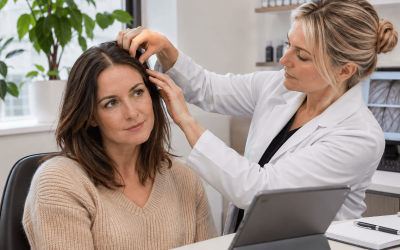
How Can a Hair and Scalp Assessment Help?
A professional hair and scalp assessment can provide a clearer picture when the visible signs of breakage and hair loss overlap. Rather than relying on one symptom, the assessment considers the pattern of thinning, the condition of the strands and any relevant changes in your health.
A clinician may ask when the problem began, whether it developed gradually or suddenly and whether similar patterns occur in your family. They may also examine the scalp for inflammation and look for signs of hair shaft damage.
Magnification or other appropriate examination methods can sometimes provide additional information about hair density and strand condition. Where necessary, the findings may indicate that medical investigation or specialist referral is needed.
The purpose is to identify the likely cause before deciding on the next steps. This can help distinguish between changes that may respond to gentler hair care and conditions requiring a different approach.
Understanding Hair Breakage vs Hair Loss and What to Do Next
In conclusion, understanding hair breakage vs hair loss begins with recognising where the problem occurs. Breakage affects the visible hair shaft, while hair loss involves shedding or changes in hair production at the follicle.
Short, uneven pieces and damaged ends may suggest breakage, while increased shedding, a widening parting or reduced scalp coverage may indicate hair loss. However, these signs can overlap, and the most appropriate response depends on identifying the underlying cause.
If you’re concerned about changes in your hair, start by considering whether the strands are snapping, whether scalp coverage has changed and how long the problem has been developing. These observations can help you describe your concerns more clearly and decide whether professional advice is needed.
Are you noticing increased breakage, unusual shedding or changes in your hair’s thickness? Universal Hair Clinic can discuss your concerns and help you explore suitable hair and scalp assessment options. To enquire about a consultation, call 01 679 3618 or visit our contact page.