A hair transplant can feel like a permanent solution for thinning hair or a receding hairline. After investing time and money in the procedure, you naturally want the results to last. But what happens if your hair keeps thinning in areas you didn’t treat? Could you eventually find yourself dealing with hair loss again, despite having undergone surgery?
For many people, the concern goes beyond whether the transplanted hair will survive. They also wonder how their remaining natural hair will change in the years ahead, especially if they have a progressive form of hair loss. These longer-term changes can significantly affect how satisfactory the results remain.
Does a Hair Transplant Permanently Stop Hair Loss?
A hair transplant can provide long-lasting hair coverage, but it does not permanently stop the underlying process responsible for hair loss. The procedure moves healthy follicles from one part of the scalp to areas experiencing thinning or baldness. While these transplanted follicles are often more resistant to pattern hair loss, the surrounding natural hair may continue to thin, even after a successful procedure.
According to Carol Johnson, Consultant Trichologist at Universal Hair & Scalp Clinic, “A hair transplant redistributes hair. It does not create it. Instead, it moves hair from one part of the scalp to another.” Hair follicles are typically taken from the back or sides of the scalp, where they tend to be less susceptible to pattern hair loss. They are then implanted into areas experiencing thinning or baldness.
There are two commonly used techniques. Follicular Unit Extraction (FUE) involves removing individual follicular units from the donor area. Meanwhile, Follicular Unit Transplantation (FUT) involves removing a strip of scalp tissue from which follicular units are subsequently prepared.
The transplanted follicles generally retain characteristics of their original donor area, which is why many continue producing hair long after surgery. However, their survival and growth are not guaranteed indefinitely. More importantly, neither FUE nor FUT prevents hair loss from progressing in follicles that were not transplanted.

Why Can Hair Loss Continue After a Hair Transplant?
Hair loss can continue after a hair transplant because surgery does not address the underlying causes of thinning in your remaining natural hair. This is particularly relevant for people with androgenetic alopecia, a hereditary condition in which certain follicles are sensitive to hormonal influences. Although transplanted hair may continue growing successfully, untreated areas of the scalp can gradually lose density.
One of the main hormones involved is dihydrotestosterone (DHT), which can cause genetically susceptible follicles to shrink over time. This process, known as follicular miniaturisation, causes affected follicles to produce progressively finer and shorter hairs, eventually making the scalp more visible.
It is worth mentioning that continued shedding is not always caused by androgenetic alopecia. Illness, significant nutritional deficiencies and certain scalp conditions can also disrupt normal hair growth. These problems may develop independently of the original reason for surgery.
For this reason, further thinning should not automatically be considered a failed transplant. Establishing the cause is important before deciding whether additional treatment or medical assessment is necessary.
What Is Shock Loss After a Hair Transplant?
Shock loss refers to shedding that can occur following hair transplantation, usually as a response to the physical stress of surgery. It may affect transplanted hair shafts or existing hairs near the treated area. In many cases, the shedding is temporary and hair growth resumes over the following months. However, some already weakened native follicles may not recover fully.
Hair growth occurs in cycles, and the disruption caused by surgery can temporarily shift follicles into a resting phase. As a result, some hairs may fall out before new growth begins. Although this can be alarming when the transplanted area initially appeared fuller, losing the visible hair shaft does not necessarily mean that the follicle itself has been damaged.
Recovery takes time. New growth from transplanted follicles often becomes noticeable after several months, while the final cosmetic result may take considerably longer to develop. However, the outcome can be less predictable for existing hairs that were already significantly weakened before surgery.
It is also important to distinguish temporary post-operative shedding from progressive hair loss. Although the two may initially appear similar, ongoing thinning caused by androgenetic alopecia will not necessarily resolve as part of the normal recovery process.
If shedding is unusually severe, persists beyond the expected recovery period or is accompanied by concerning scalp symptoms, contact your transplant surgeon. They can assess whether healing is progressing as expected and determine if further investigation is needed.
Can a Hair Transplant Look Uneven as Hair Loss Progresses?
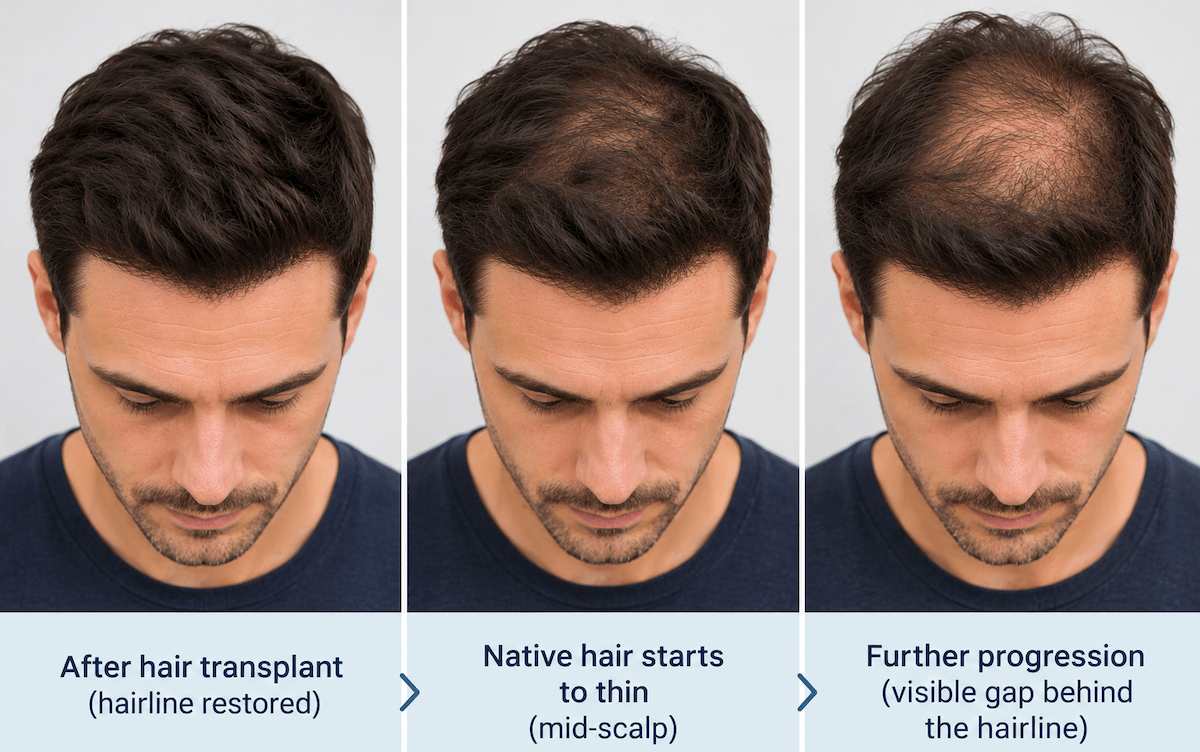
Yes. A hair transplant can begin to look uneven if the transplanted follicles continue growing while the surrounding natural hair gradually disappears. This may create visible gaps or differences in density between treated and untreated areas. Although the original transplant may have been successful, continued hair loss can change the overall appearance of the scalp over time.
This can become particularly noticeable when a transplant has been used to restore a receding frontal hairline. The transplanted follicles may continue producing hair for years, maintaining the appearance of the restored hairline. However, if the native hair immediately behind that area continues thinning, a noticeable gap may eventually develop. This can make the transplanted hair appear separated from the remaining hair, particularly as the difference in density becomes more pronounced.
The possibility of future thinning is one reason experienced transplant surgeons consider more than the immediate appearance of the hairline. They must also account for the likely progression of hair loss and the limited number of follicles available in the donor area.
Some patients may consider a second procedure to address newly exposed areas. But additional transplantation is not always a practical or suitable solution. Donor-hair availability is finite, and repeated procedures can further reduce the remaining supply. This is why long-term surgical planning must account for future changes in hair density, rather than focusing solely on the immediate result.
Should Hair Loss Be Stabilised Before a Hair Transplant?
Hair loss should ideally be assessed and, where possible, stabilised before a hair transplant, particularly when thinning is progressing rapidly. Although complete stabilisation is not always achievable, managing ongoing hair loss may help preserve existing hair and improve the chances of a satisfactory long-term result. The decision to proceed with surgery should consider both current hair density and the likelihood of future thinning.
Age is an important consideration, especially for younger adults whose pattern of hair loss may still be developing. Someone experiencing significant thinning in their early twenties may undergo transplantation to restore their hairline, only to find that the surrounding natural hair continues receding over the following years. This could affect the appearance of the original result and potentially create a need for further treatment.
Family history and the rate of hair loss can provide additional information about how thinning has progressed. The condition of the donor area also matters because it influences the number and quality of follicles available for transplantation. However, these factors cannot predict precisely how much hair someone will lose over their lifetime.
Before proceeding with surgery, a trichological assessment may help document existing hair density and identify signs of active thinning. If an inflammatory or scarring scalp condition is suspected, further medical evaluation may be necessary. The transplant surgeon can then consider these findings when determining whether surgery is appropriate and how best to plan for future changes.

Do You Still Need Hair Loss Treatment After a Hair Transplant?
Some people benefit from continued hair loss treatment after a hair transplant because the procedure does not protect their remaining natural follicles from further thinning. Ongoing management may help slow the progression of certain types of hair loss and preserve overall density. But the most appropriate approach depends on the underlying condition, previous treatment history and individual response.
As Carol explains, “If active pattern hair loss goes untreated after surgery, native hair keeps receding around the transplanted or fixed grafts.” This can gradually affect the overall appearance of the transplant, even when the implanted follicles continue producing hair. Ongoing treatment may therefore be recommended to help manage progressive thinning in the surrounding natural hair.
For people with androgenetic alopecia, treatments may be recommended to help manage the ongoing effects of follicular miniaturisation. These treatments require assessment by an appropriately qualified professional, and their effectiveness varies between individuals.
Non-surgical approaches may also have a role in longer-term hair loss management. For example, low-level laser therapy has been studied for certain types of pattern hair loss. Such treatments should be considered according to the person’s needs and the available evidence.
For this reason, ongoing care should focus on the individual’s broader hair loss pattern rather than the transplanted area alone. Any treatment involving the scalp after surgery should be discussed with the transplant surgeon, particularly while healing is ongoing.
How Can a Trichologist Help After a Hair Transplant?
A trichologist can help monitor hair and scalp health after a hair transplant, particularly when continued thinning raises concerns about the long-term result. Once the scalp has healed sufficiently, an assessment of the condition of the surrounding native hair may be done to determine whether additional professional advice or medical investigation is needed.
For people experiencing further thinning after transplantation, this type of assessment can provide a clearer picture of their current hair and scalp condition. At Universal Hair & Scalp Clinic, Consultant Trichologist Carol Johnson provides professional assessments for people experiencing different forms of hair loss, including those concerned about changes following a transplant.
An assessment may involve examining the scalp and hair density, discussing the history of hair loss and reviewing any changes since the procedure. Where appropriate, digital scalp analysis can provide a closer view of the hair and scalp and help document visible changes over time. The findings can inform recommendations about suitable non-surgical hair loss management or indicate when further medical evaluation is necessary.
The timing of any assessment or treatment is also important. During the initial recovery period, patients should follow their surgeon’s instructions and avoid introducing additional scalp treatments without approval. If you experience increasing redness, significant pain, discharge or other concerning symptoms following surgery, contact your transplant surgeon promptly.
For those whose scalp has healed but who continue to notice gradual thinning, a professional hair and scalp assessment can help clarify whether the changes may be related to ongoing pattern hair loss or another concern requiring investigation.

In conclusion, a hair transplant can provide lasting improvements in hair coverage, but it does not necessarily prevent future hair loss. Transplanted follicles may continue growing for many years while the surrounding natural hair becomes progressively thinner. Without considering these changes, even a successful procedure may produce an uneven appearance over time.
The most sustainable approach begins with realistic expectations about what transplantation can achieve. Whether you are considering surgery or have already undergone a procedure, assessing the underlying pattern of hair loss and exploring appropriate long-term management can help you make better-informed decisions about your hair and scalp.
Concerned about continued hair loss after a hair transplant? Contact us at +353 (0)1 679 3618 to arrange a professional hair and scalp consultation. Our experienced trichologist can assess your concerns and discuss suitable next steps for managing your hair and scalp health.